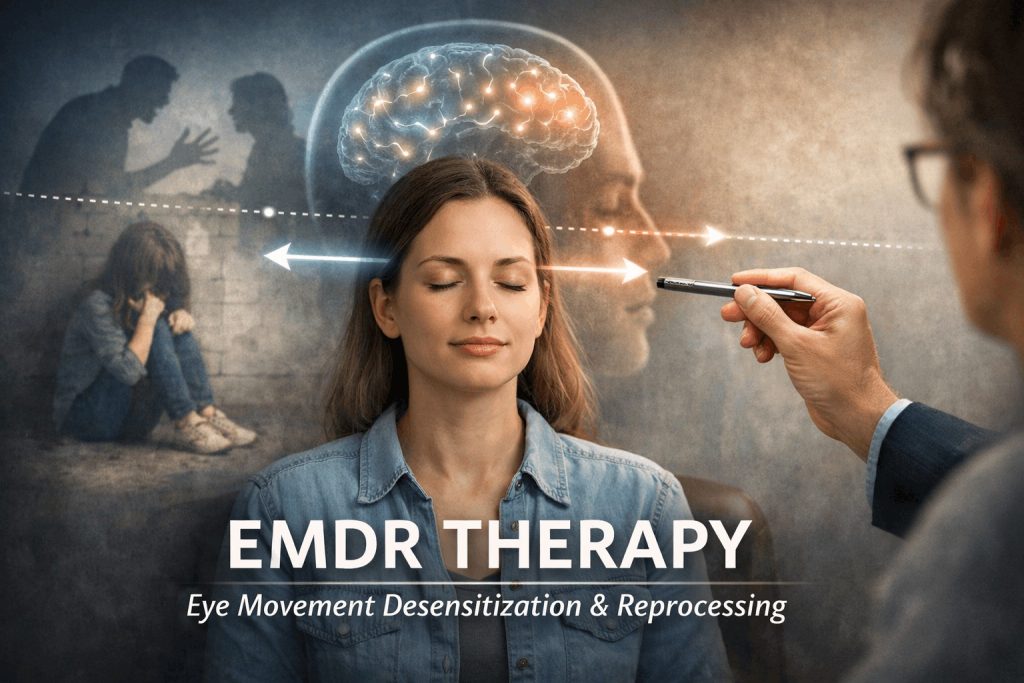
 EMDR counseling is a remarkable tool being utilized by therapists to treat a growing number of different psychological conditions. Mental health professionals, psychologists, and clinical therapists are all embracing the many benefits of EMDR treatment.
As such, the popularity of EMDR counseling comes with a common question often debated among professionals working in the mental health field: does an EMDR therapist need to undergo the full process of certification, or are basic EMDR training sessions all that is needed?
This article provides an in-depth look at the objectives of EMDR training along with the differences between EMDR-trained therapists and EMDR-certified therapists. For more general information about Eye-Movement Desensitization and Reprocessing, see EMDR Explained.
The Trained vs. Certified Distinction
Before getting into the specifics, it helps to understand what the distinction actually means. Both EMDR-trained and EMDR-certified therapists have completed the foundational training required to practice EMDR. The difference is in what comes after that training.
EMDR-trained therapists have completed the EMDR International Association (EMDRIA)-approved basic training program. This qualifies them to provide EMDR therapy. Many excellent EMDR therapists work at this level throughout their careers and serve clients effectively.
EMDR-certified therapists have completed the basic training and then met additional requirements set by EMDRIA — accumulating supervised practice hours, consulting with an approved EMDR consultant, completing continuing education credits, and meeting other criteria detailed below. Certification represents an additional commitment of time and supervised practice beyond the foundational training.
Both levels qualify a therapist to provide EMDR. Certification signals additional supervised experience and continuing engagement with EMDRIA’s professional community.
EMDR Training
EMDR Basic Training covers an evidence-based therapy designed to help manage the negative thoughts and feelings commonly associated with traumatic memories. PTSD treatment and trauma processing are the most well-established applications for EMDR therapy, and it is increasingly being applied to other clinical concerns as well.
EMDR training prepares therapists to use EMDR through lectures, demonstrations, videos, mentoring, practice, and other learning methods. EMDRIA has developed standards that set the learning objectives:
- Learn various applications for EMDR counseling as treatment for PTSD, trauma, and other clinical needs.
- Become familiar with the 8 Phases of EMDR Therapy beyond a general understanding of its use.
- Understand how EMDR works and why it is a useful treatment option.
- Learn how to develop a thorough treatment plan for trauma counseling.
- Learn how to promote proper trauma processing for clients.
- Learn how to properly use Bilateral Stimulation (Dual Attention Stimulation) during treatment.
- Learn the safety techniques relevant to clients seeking trauma therapy.
- Learn how EMDR is being applied to specialized treatment for anxiety, sexual assault, grief, addiction, substance abuse, phobias, and other concerns.
- Learn how to integrate EMDR Therapy into an established clinical setting.
Training generally takes place across approximately 6 months and is delivered in multiple parts. Once complete, the licensed therapist receives an EMDR Training Certificate of Completion and is permitted to provide EMDR counseling.
EMDR Certification
Becoming certified in EMDR requires completing the basic training and then meeting additional criteria set by EMDRIA. The requirements include:
- Being a licensed mental health professional able to practice independently.
- Becoming a registered member of EMDRIA.
- Consulting with an approved EMDR consultant for an additional 20 hours (minimum 10 hours individual, up to 10 hours in small group).
- Completing at least 50 EMDR treatment sessions with a minimum of 25 clients.
- Completing 12 hours of CEUs in EMDR after basic training is complete.
To maintain certification, the therapist must complete 12 hours of EMDRIA-approved continuing education credits every two years. The process is rigorous, and it represents a substantial additional commitment beyond the basic training. For me personally, pursuing certification deepened my understanding of the technique through consultation with experienced EMDR clinicians and ongoing peer dialogue about complex cases.
What This Means for Clients
For clients considering EMDR therapy, the most important factor is finding a therapist who is properly trained and whose clinical approach fits your needs. An EMDR-trained therapist may serve you well; an EMDR-certified therapist offers additional supervised experience. Either credential indicates the therapist has completed the foundational EMDRIA training and is qualified to provide EMDR.
If you have questions about a therapist’s specific training and experience, ask. Most EMDR therapists are happy to explain their credentials, their consultation history, and how they approach complex trauma work.
Conclusion
The difference between an EMDR-trained therapist and an EMDR-certified therapist comes down to additional supervised experience and ongoing engagement with EMDRIA’s professional community. Both can provide EMDR therapy. Certification reflects an additional commitment, particularly relevant for therapists who want to specialize in EMDR or who plan to take on more complex cases. The choice between working with a trained or certified EMDR therapist depends on your particular needs, your therapist’s experience with concerns like yours, and the fit between you and the therapist.
To request an appointment online with a Certified EMDR Therapist in Boca Raton, contact Morgan Center for Counseling & Wellbeing or call (561) 717-2900.
Meet the Therapist
 Jody Morgan, LCSW, CCTP is the founder of the Morgan Center for Counseling and Wellbeing in Boca Raton, Florida. He is a compassionate therapist dedicated to helping individuals grow and heal. With extensive training and certifications, Jody specializes in trauma-focused treatments and works with adults and seniors managing anxiety, depression, PTSD, and past trauma.
- Licensed Clinical Social Worker (LCSW)
- Certified Clinical Trauma Professional
- EMDR Certified
- Advanced Clinical Heart-Centered Hypnotherapist
- Member, Florida Society of Clinical Hypnosis
- Certificate in Integral Breath Therapy (Integration Concepts)
At Morgan Center, Jody Morgan provides private psychotherapy services that lead to lasting relief. His experience and evidence-based techniques help clients overcome the effects of grief, trauma, and anxiety, and achieve meaningful change. Treatment services are tailored to meet the specific needs of each client.