 Anxiety has a way of making the ordinary feel like too much. A full inbox, a social plan, a decision that shouldn’t be a big deal, and suddenly your chest is tight and your mind is running through everything that could go wrong. If that sounds familiar, I want you to know two things up front: you’re not weak or broken for feeling this way, and anxiety is one of the most treatable concerns I see in my practice here in Boca Raton.
“You are the sky. Everything else — it’s just the weather.” — Pema Chödrön
I keep that line close because it captures something true about anxiety. The storms feel enormous while they’re happening, and it’s easy to mistake the weather for who you are. But you are not your anxiety. With the right support, the weather becomes something you can move through rather than something that defines you.
What Anxiety Actually Is
Anxiety is your body’s alarm system doing its job, just at the wrong times and too loudly. It’s the same fight-or-flight response that would serve you well in real danger, firing instead over emails, conversations, and what-ifs. That’s why it shows up in the body as much as the mind: a racing heart, shallow breath, tension, trouble sleeping, a stomach in knots. None of that is imagined. It’s a real physiological response, which is part of why anxiety can feel so hard to simply talk yourself out of.
Most of us feel anxious now and then, and that’s normal. Sometimes stress triggers anxiety. It becomes worth addressing when it settles in and starts running the show, when worry is constant, when it keeps you from things you want to do, or when the physical toll wears you down. If you’ve reached that point, that’s not a failure of willpower. It’s a sign that some support would help, and it’s exactly the kind of thing anxiety treatment is meant for.
The Many Faces of Anxiety
Anxiety doesn’t look the same for everyone, and part of what makes it tricky is how many forms it takes. You may recognize yourself in one of these, or in several:
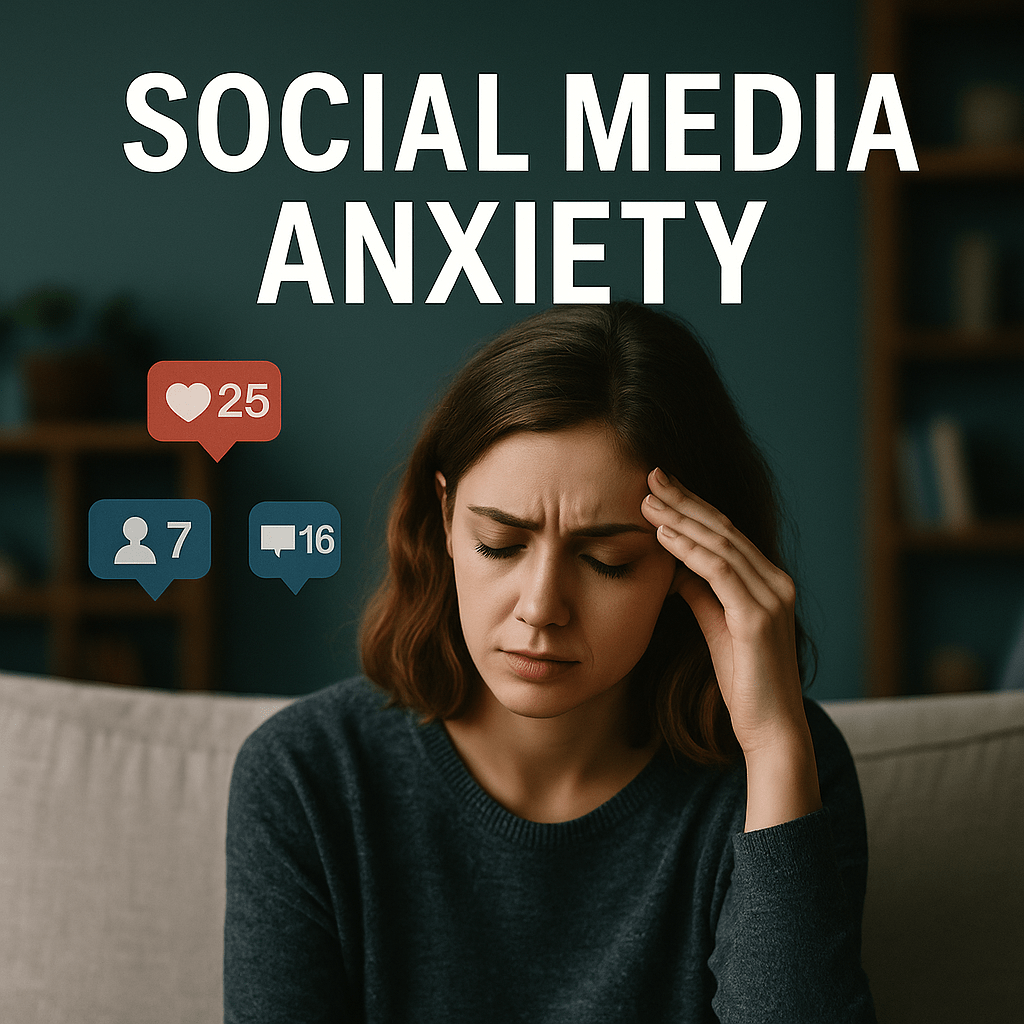
For some people it lives in the head as relentless overthinking — the same worries circling long after they’re useful. For others it’s sharpest in social settings, the fear of being judged that can make social situations feel like a test you’re failing. Some of it is fed by the world we live in now: the steady drip of distressing news and the constant comparison of social media, both of which can quietly keep your nervous system on edge. Holiday stress and caregiver stress can trigger anxiety as well. Whatever the trigger, for many people anxiety arrives as panic — sudden, intense waves of fear that seem to come from nowhere.
These aren’t separate problems so much as different shapes the same underlying anxiety takes. Naming the shape yours tends to take is often a useful first step, because it points toward what will actually help.
How I Work With Anxiety
My approach to anxiety is much the same as my approach to trauma: I meet people where they are and move at their pace. There’s no single right way through this, and I won’t push you faster than feels safe. As an anxiety therapist, I start by understanding how anxiety shows up for you specifically, and then we draw on the tools that fit.
A few of the approaches I use most:
Cognitive behavioral therapy. Anxiety runs on stories — the worried predictions and harsh self-talk that feel like fact in the moment. CBT gives you a way to notice those patterns, question them, and build steadier ways of thinking. It’s practical, well-researched, and especially effective for anxiety.
EMDR. When anxiety is rooted in past experiences that the mind hasn’t fully processed, EMDR can help the nervous system settle in a way talk alone sometimes can’t. It’s a powerful option when anxiety has deeper roots.
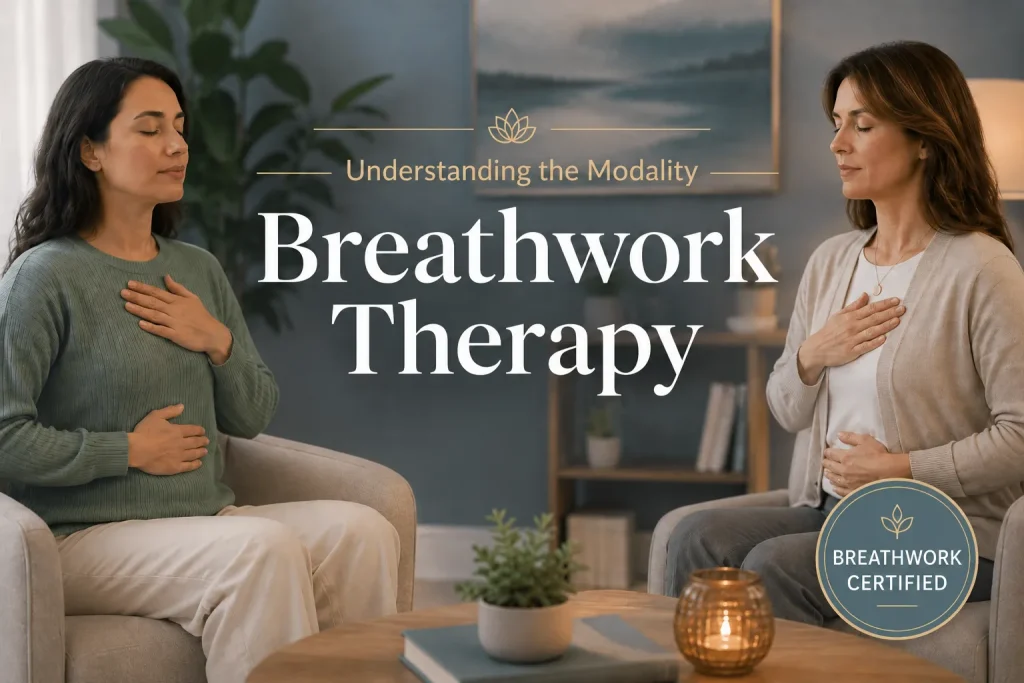
Breathwork. Because anxiety lives so much in the body, learning to work with the breath is one of the most direct ways to calm the nervous system in the moment. It’s a skill you can carry with you and use anywhere, long after a session ends.
I’ll often combine these depending on what you need, and I’ll teach you tools you can use on your own between sessions. Practices like meditation and mindfulness can help here too, giving you a way to find a little steadiness in the middle of a hard day. We may talk about setting boundaries.
What to Know About Anxiety Treatment
Anxiety responds well to treatment. That’s the honest, hopeful truth, and I see it borne out in my work all the time. For some people, a relatively short course of therapy is enough to get the tools and relief they need. For others, especially when anxiety is tangled up with trauma or has been around a long time, the work goes deeper and takes longer. Sometimes anxiety is part of a condition called PTSD. Either way, progress is real and reachable.
Sometimes medication has a role too, particularly when anxiety is severe. As a therapist I don’t prescribe, but if that’s something worth exploring, I can talk it through with you and coordinate with a psychiatrist or your physician. The goal is always to find the combination that fits you, not to fit you into a single approach.
Looking for an Anxiety Counselor?
Anxiety has a way of convincing you that you should be able to handle it yourself, and that asking for help is a kind of failure. It isn’t. Reaching out is one of the most effective things you can do, and it’s often the hardest first step, precisely because anxiety makes everything feel like more than you can manage.
If you’re in the Boca Raton area and searching for anxiety counseling, an anxiety therapist, or simply someone to help you find steadier ground, I’d be glad to hear from you. We’ll start wherever you are, at whatever pace feels right. To schedule a consultation, contact Morgan Center for Counseling and Wellbeing or call 561-717-2900.
Meet the Therapist

 Jody Morgan, LCSW, CCTP is the founder of the Morgan Center for Counseling and Wellbeing in Boca Raton. He is a compassionate psychotherapist dedicated to helping individuals grow and heal, using evidence-based approaches including CBT, EMDR, and breathwork to help clients work through anxiety, depression, grief, and the lasting effects of trauma. He offers telehealth therapy in the State of Florida.
- Licensed Clinical Social Worker (LCSW)
- Certified Clinical Trauma Professional
- EMDR Certified
- Advanced Clinical Heart-Centered Hypnotherapist
- Member, Florida Society of Clinical Hypnosis
- Certificate in Integral Breath Therapy (Integration Concepts)
At Morgan Center, Jody Morgan provides private psychotherapy services that lead to lasting relief. His experience and evidence-based techniques help clients overcome the effects of grief, trauma, and anxiety, and achieve meaningful change. Treatment services are tailored to meet the specific needs of each client, offering emotional support and guidance throughout the process.